
We've all heard the buzz, right? Artificial intelligence diagnosing diseases with incredible speed and sometimes even better accuracy than human doctors. It sounds like something out of a science fiction movie, a future where every ache and pain is instantly understood. But what does that *actually* mean for you, for healthcare, for the future of getting well? Let's peel back the layers and talk about what's really happening.
Feeding the Beast: The Data Diet Behind AI's Accuracy
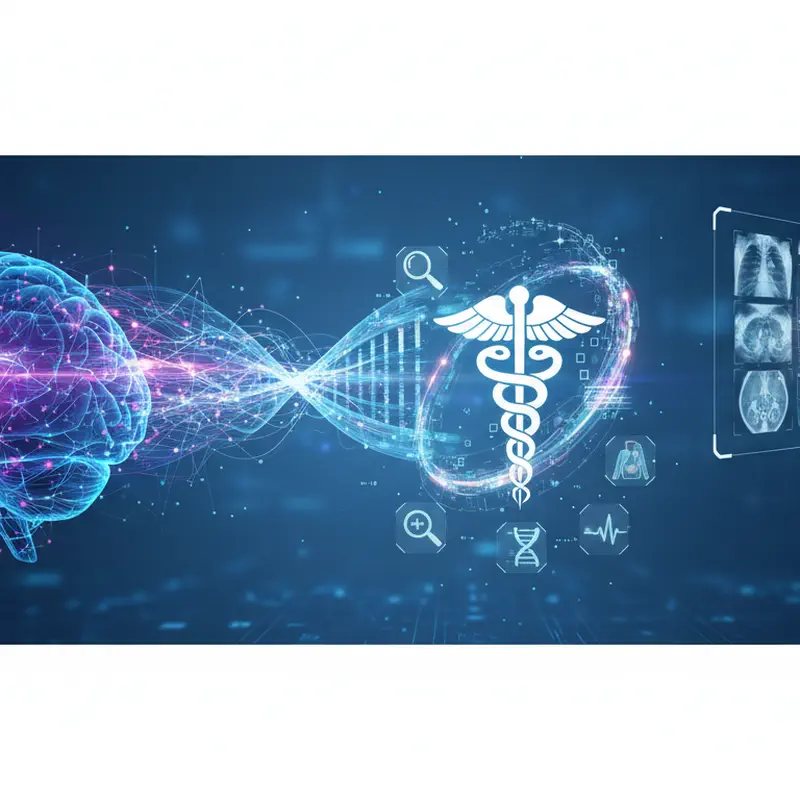
Forget your doctor squinting intently at an X-ray for ten minutes. An AI system, specifically a large language model (LLM) or a deep learning algorithm designed for medical image analysis, operates on an entirely different scale. It can scan millions upon millions of medical images – X-rays, MRIs, CT scans, pathology slides – along with patient records, genetic data, and vast medical literature in the blink of an eye. That's a sheer volume of information no human brain, no matter how brilliant, could ever hope to process or recall.
This isn't just about speed, though. It's fundamentally about pattern recognition. Think of the AI as a super-powered detective, trained on an unimaginable archive of cases. It can identify tiny, subtle anomalies in a brain MRI, for instance, that might signal early-stage neurological disease. These are things even the most seasoned radiologist could potentially miss, not because they lack skill, but simply because they are human and operate within human limitations. The AI doesn't get tired; it doesn't have a bad day. It consistently applies its learned patterns to every pixel, every data point.
This capability is why we're seeing compelling studies where AI systems, like some advanced prototypes developed by Microsoft, demonstrate remarkably high diagnostic accuracy. In some scenarios, these systems have been shown to outperform human doctors on specific, well-defined tasks. It's crucial to understand this as augmentation, though, not replacement. The AI acts as an extra pair of incredibly sharp, tirelessly working eyes, providing insights that complement, rather than diminish, the physician's role.
Decoding Complexity: When Symptoms Don't Add Up
Diagnosis isn't always about a clear scan or a textbook case. More often, it's a messy, intricate puzzle of symptoms that seem to contradict each other or point in a dozen different directions. "I have this strange headache, but also my arm feels numb, and I've been tired for weeks." Sound familiar? This is the realm of differential diagnosis, where doctors painstakingly sift through a myriad of possibilities, trying to connect disparate dots.
This is another area where AI truly shines. Imagine giving an AI system all your reported symptoms, your complete medical history, family history, and perhaps even some lifestyle data from a wearable device. It can then cross-reference all that against gargantuan databases of diseases, known drug interactions, rare conditions, and epidemiological patterns. The AI doesn't just guess; it suggests a refined list of probable conditions, each with a calculated probability score. This isn't just "Dr. Google" throwing random possibilities at you; this is an informed, data-driven hypothesis generation process that’s orders of magnitude more sophisticated.
AI isn't here to replace the doctor's intuition, but to arm it with unparalleled data.
The AI won't hand you *the* definitive answer on its own, at least not yet. But what it does offer your doctor is invaluable: a significantly refined starting point, a drastically shortened list of possibilities, or even flagging a rare condition that might not immediately come to mind for a human practitioner. This proactive insight can save precious time, dramatically reduce the chances of misdiagnosis, and get you on the correct path to treatment much, much faster. It's like having a hyper-competent, always-on research assistant working exclusively and tirelessly on your specific case.
The Human-AI Team-Up: The Future of Healthcare
So, does this mean your beloved family doctor, the one who knows your quirks and your worries, is suddenly obsolete? Absolutely not. AI is a tool, a phenomenally powerful one, yes, but still just a tool. It inherently lacks empathy, the nuanced clinical judgment required in complex, non-standard situations, and critically, the ability to build trust and offer genuine human comfort. These profoundly human elements are not only irreplaceable but remain central to healing.
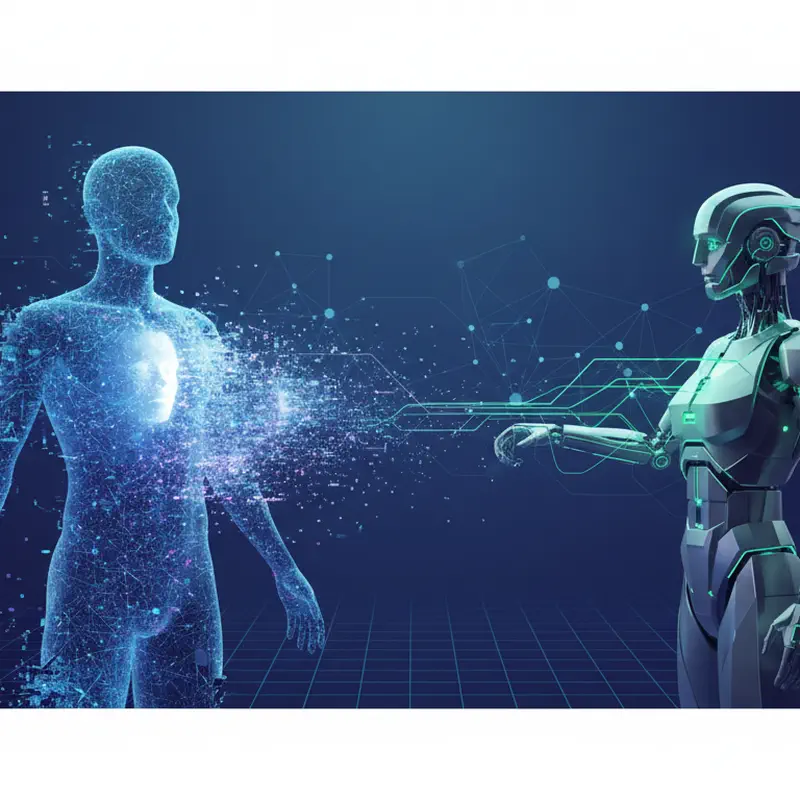
The true magic, and where we're seeing the most promising results, occurs when humans and AI work together seamlessly. A physician can leverage AI to rapidly analyze medical images for subtle signs, obtain a comprehensive differential diagnosis list for puzzling symptom sets, or even predict a patient's potential response to various treatments or the likely progression of a disease. With these AI-powered insights in hand, the doctor then applies their unique blend of medical expertise, their deep understanding of the patient's individual context, their ethical judgment, and their invaluable human intuition to make the final, informed call and formulate a personalized treatment plan.
This "human-AI collective," as some cutting-edge research describes it, is consistently proving to be the most accurate and effective approach to medical diagnosis. It intelligently minimizes the potential for human error and cognitive bias while simultaneously maximizing the AI's unparalleled data processing prowess. The result? Significantly better patient outcomes and, let's be honest, a welcome reduction in stress and workload for our often-overworked medical professionals. It’s about making doctors *better*, more efficient, and more effective, not about making them redundant.
Real-World Wins: How AI Translates to Better Care
Let's consider the very real implications of this advancement. Faster and more accurate diagnoses mean earlier intervention and treatment for critical conditions like various cancers, cardiovascular diseases, or degenerative neurological disorders. We know that in so many cases, early detection isn't just helpful; it's often the single most important factor in achieving much better prognoses and successful long-term management. Beyond that, it means fewer unnecessary and potentially invasive tests, which saves both healthcare costs and, perhaps more importantly, immense patient anxiety and discomfort.
Think about the reach. An AI diagnostic assistant means a rural clinic, perhaps thousands of miles from a specialist hospital, could leverage sophisticated diagnostic insights that are almost on par with those available in a major metropolitan medical center. This capability dramatically democratizes access to high-quality diagnostic support, bridging gaps in healthcare access and expertise that have long plagued diverse populations. It levels the playing field, giving more people a fair shot at timely and accurate diagnoses.
Of course, the journey toward perfectly integrated AI in medicine is ongoing. There are important considerations around data privacy, the potential for bias in training datasets (if not carefully managed), and the necessary regulatory hurdles that need to be cleared to ensure safety and trustworthiness. But the trajectory is undeniably clear: AI is not just another tech trend; it is fundamentally set to revolutionize medical diagnosis. It will make healthcare more precise, more efficient, and ultimately, more human-centric by allowing doctors to focus their invaluable human skills on what only they can truly provide: compassionate care and complex decision-making.
Vext Chat
WhatsApp & Telegram Automation. Upload an Excel or CSV file, paste a Zapier webhook, connect via MCP, plug in HubSpot, Zoho, or GoHighLevel, sync contacts from Google Sheets, or call the REST API directly. Any source can trigger a send - no complex setup, no code required for most workflows. Just connect and go.