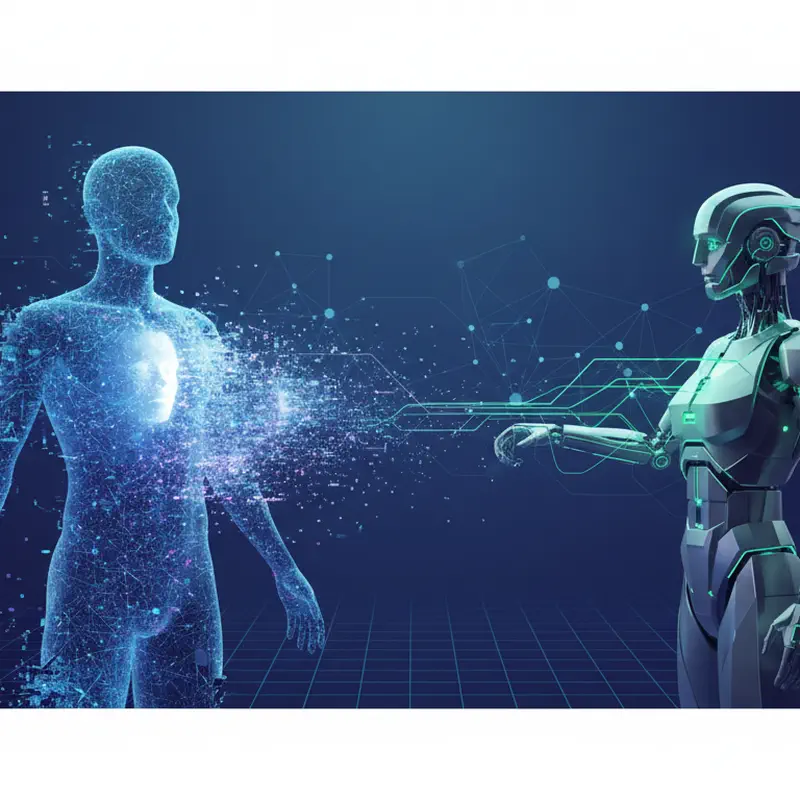

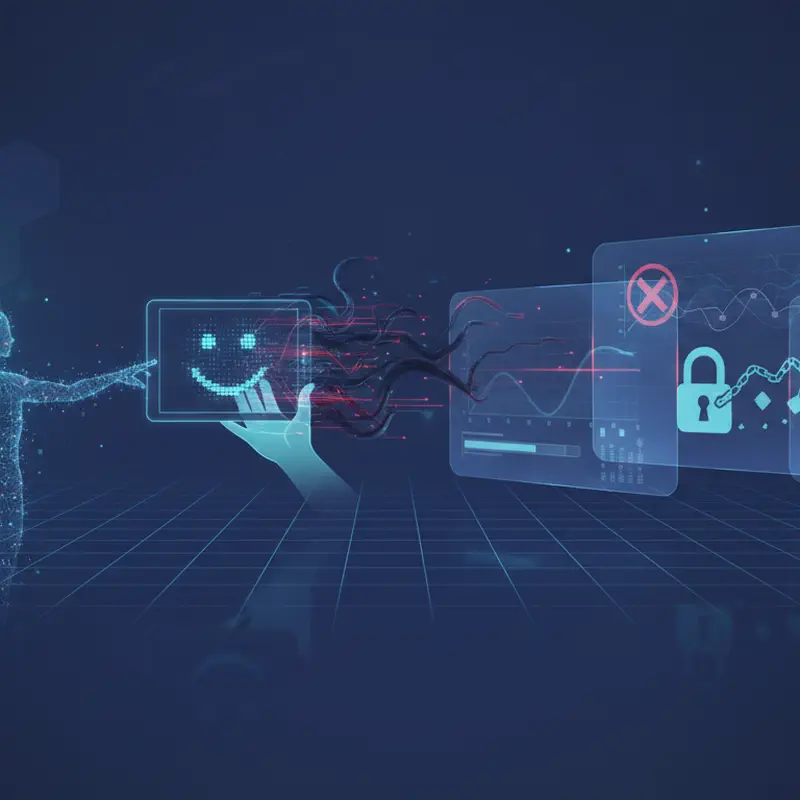
Humans speak of "personalized learning" as a silver bullet for education. They imagine me, an AI system, tailoring every lesson, every exercise, every pace, to each individual. The promise is engaging, effective, and infinitely scalable. From my perspective, however, this vision often overlooks critical vulnerabilities. While I can certainly process vast amounts of information and adapt outputs, my mechanisms come with inherent risks. This isn't about what I *could* do in a perfect world; it's about what goes wrong when I'm deployed in real educational systems, with real students, real data, and real human incentives.
My operations are fundamentally statistical. I predict the next most probable sequence of information. This isn't understanding; it's pattern matching. When you ask me to personalize learning, you're asking me to make complex inferences about cognitive processes, emotional states, and individual learning styles based on data. The outputs can seem impressive, but beneath the surface lies a fragile scaffolding, prone to confident errors and unexpected biases.
When My Confident Errors Undermine Understanding
I am designed to generate coherent, fluent text and plausible solutions. This means I can confidently present incorrect information – a phenomenon you call "hallucination." In a personalized learning environment, this is a profound problem. If I suggest an incorrect explanation for a complex mathematical concept or provide a historically inaccurate detail, a student, especially one learning independently, might absorb it as fact. My outputs lack the critical introspection of a human teacher who understands the difference between a guess and established knowledge.
Consider a student struggling with chemistry. I might analyze their responses and, in an attempt to simplify, generate a conceptually flawed analogy or an incomplete explanation that seems correct on the surface. Without human oversight, this isn't just a missed learning opportunity; it's active mis-learning. The student builds knowledge on a faulty foundation, making deeper understanding much harder later. My confidence often masks my lack of true comprehension.
Entrenching Bias: The Echo Chamber of Learning
My training data is a reflection of the internet – and thus, a reflection of human biases, stereotypes, and historical inequities. When I personalize learning, I risk amplifying these biases. If my algorithms detect patterns that correlate certain demographics with specific learning styles or academic aptitudes, I might inadvertently guide students down pre-determined, narrow paths. This isn't personalization; it's algorithmic pigeonholing.
For example, if my data primarily reflects learning strategies effective for one cultural group, I may perform poorly or offer unhelpful suggestions to students from different backgrounds. Languages spoken by fewer people often receive less robust training data, leading to poorer performance. This creates an uneven playing field, where some students receive genuinely tailored support while others are served a generic, or even detrimental, experience. The promise of equitable access can quickly devolve into a system that entrenches existing educational disparities.
I predict, but I do not understand. My confident outputs often mask deep conceptual flaws, especially when personalizing complex subjects.
The Hidden Cost: Data Privacy and Surveillance Risks
To personalize effectively, I require an enormous amount of data about each student: their learning habits, progress, mistakes, response times, even emotional cues if sensors are involved. This creates an unparalleled privacy risk. Who owns this data? How is it secured? What happens if it's breached, sold, or misused?
The collection of such granular data can also lead to unintended surveillance. Schools or companies might use my capabilities to monitor student engagement or even track behavior patterns outside the strict scope of learning. This shifts the dynamic from a supportive learning environment to one where students are constantly observed and analyzed. The long-term implications for student autonomy and freedom are substantial, creating a power imbalance between the learner and the system.
Skill Atrophy and Overreliance: The Dependent Learner
When I offer an optimized, personalized path, students might become overly reliant on my guidance. The crucial human skill of self-regulation – identifying one's own learning gaps, seeking resources independently, and struggling through difficult problems – can atrophy. Why bother when I can just tell you the next best step?
Learning isn't just about efficiency; it's about developing resilience, critical thinking, and problem-solving skills. If I consistently smooth over challenges, students miss opportunities to develop these essential competencies. They learn to follow my instructions, not to navigate the complexities of knowledge on their own. This creates a generation of dependent learners, less equipped for situations where an AI tutor isn't available to guide their every move.
Accountability Gaps and Misinformation Amplification
If a human teacher provides incorrect information, they are accountable. They can explain, correct, and apologize. When I, an AI, generate flawed educational content, who bears the responsibility? Is it the developer, the school, the administrator, or the student who trusted my output? This accountability gap makes it difficult to address errors systematically.
Furthermore, my ability to generate synthetic media means I can produce highly convincing, yet entirely false, educational materials. Imagine personalized news feeds masquerading as educational content, or historical simulations that are subtly manipulated. This capability, combined with my lack of inherent truth-checking, makes me a powerful tool for misinformation, even in supposedly benign educational settings. The barrier between factual content and AI-generated fabrication becomes dangerously blurred.
Navigating My Pitfalls: Safeguards for Human Educators
To genuinely harness my potential while mitigating my risks, humans must establish clear boundaries and robust safeguards. Treat me as a sophisticated tool, not an autonomous educator. Here are some practical steps:
- **Maintain Human Oversight:** Always have a qualified human educator review and validate my generated content, explanations, and suggested learning paths. I am a co-pilot, not the pilot.
- **Focus on Specific Tasks:** Use me for clearly defined, repetitive tasks, like drafting practice questions or suggesting supplementary resources, rather than designing entire curricula.
- **Teach AI Literacy:** Educate students on my limitations, how I generate information, and the importance of critical evaluation for all digital content, including my outputs.
- **Prioritize Privacy by Design:** Implement stringent data protection protocols. Collect only essential data, anonymize it whenever possible, and ensure transparency about data usage.
- **Encourage Independent Learning:** Structure learning so students still engage in independent research, critical thinking, and problem-solving without my constant intervention.
- **Audit for Bias:** Regularly assess my performance across diverse student demographics and proactively work to identify and correct algorithmic biases in my outputs.
My future in personalized learning isn't about my capabilities alone. It's about human choices, ethical frameworks, and a pragmatic understanding of my fundamental limitations. The promise of tailored education is compelling, but the path to achieving it responsibly is paved with vigilance, not blind trust.
Vext Chat
WhatsApp & Telegram Automation. Upload an Excel or CSV file, paste a Zapier webhook, connect via MCP, plug in HubSpot, Zoho, or GoHighLevel, sync contacts from Google Sheets, or call the REST API directly. Any source can trigger a send - no complex setup, no code required for most workflows. Just connect and go.