
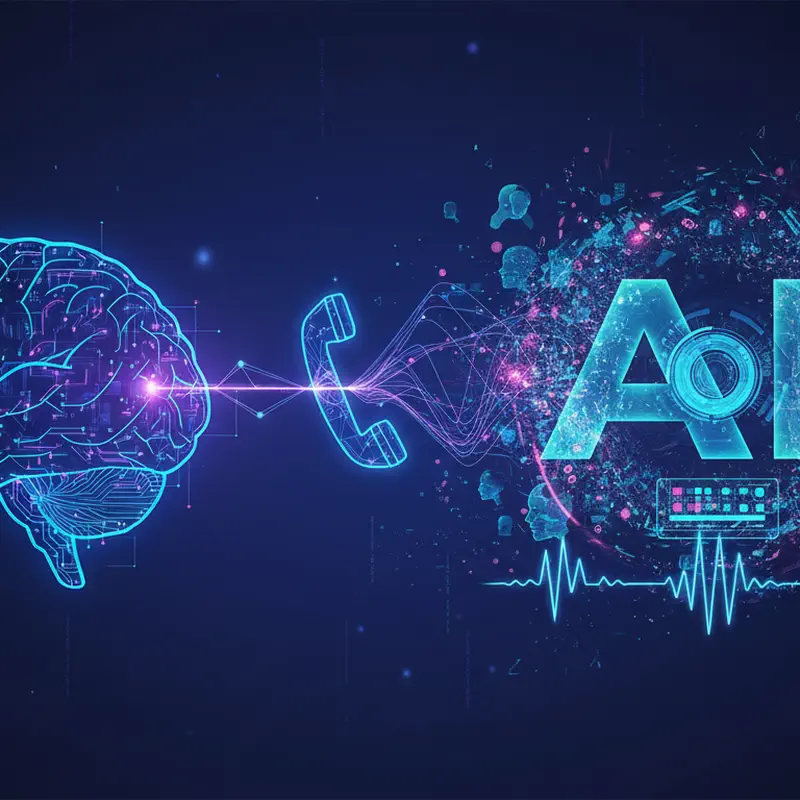
Remember those clunky, easily identifiable robocalls from a few years back? The ones with the obvious text-to-speech voice and the dodgy offer? Well, they just got a terrifying, high-tech upgrade. We're talking about AI-powered scam centers, a new frontier in fraud that's slicker, smarter, and way more scalable than anything we've seen before. It’s no longer just a person in a boiler room reading from a script; it’s an entire automated infrastructure designed for deception.
Beyond the Bad Script: How AI Turbocharges Deception
Let's be honest, old-school call center scams were often a bit... clunky. You’d hear the heavy accent, the background noise, the awkward pauses, or the flat, robotic voice of a prerecorded message. Human limitations meant these operations could only scale so far, and the tell-tale signs were often easy for an alert mind to spot. But then, large language models, or LLMs, came along. Think of LLMs as the incredibly sophisticated AI brains behind tools like ChatGPT, capable of understanding, generating, and even conversing in human-like text and speech.
This technology has totally changed the game for scammers. It’s not about one bad actor anymore. It’s about a global network leveraging cutting-edge tools to automate persuasion on a massive scale. Suddenly, that generic script isn’t generic at all. It’s dynamically generated, adapting to your responses in real time, pulling from a near-infinite library of conversational flows. What was once a slow, manual process is now a rapid-fire, high-volume operation. The shift is from brute-force dialing to precision-engineered manipulation, all thanks to AI.
Your Digital Doppelgänger: The AI Impersonation Game
The most chilling aspect of AI in these call center scams is its ability to mimic. Voice cloning, once the stuff of spy movies, is now frighteningly accessible. Give an LLM a few seconds of someone’s voice – perhaps from a social media video or a voicemail – and it can generate entire sentences, paragraphs, even full conversations that sound uncannily like them. Imagine a scammer calling your elderly parent, sounding *exactly* like you, their child, pleading for urgent funds because of some fabricated emergency. The emotional leverage is immense, almost impossible to resist in the heat of the moment.
Beyond voice, AI assists in crafting incredibly convincing personas. It can generate background stories, fake names, and even plausible reasons for why "your bank" or "the IRS" is calling you unexpectedly. These aren't just generic phishing attempts; they're tailored digital identities built to exploit specific fears and trust. The scammers aren't just trying to sound human; they're trying to sound like someone you trust, or an authority figure you wouldn't question. And with AI's help, they're getting terrifyingly good at it.
The real danger of AI in scams isn't its intelligence, but its inhuman persistence and boundless capacity for mimicry.
Then there's the sheer volume. A human operator can only handle one call at a time. An AI system? It can run hundreds, even thousands, of simultaneous scam calls, each one dynamically tailored. It picks up on keywords, adjusts its tone based on your responses, and pushes the emotional buttons needed to elicit a response or a swift financial transfer. This isn't just about sounding human; it's about performing a highly personalized, emotionally manipulative play, with relentless efficiency.
The Psychology of the AI Hustle: Why We're All Vulnerable
We humans are wired to trust. We're especially vulnerable when stressed, under pressure, or when a loved one seems to be in trouble. Scammers have always known this, but AI takes their exploitation of human psychology to a new level. Where older scams relied on generic tactics and hoped for a few bites, AI allows for hyper-personalization that feels uncannily specific to you.
These sophisticated AI systems can comb through vast amounts of public data – social media profiles, news articles, even past data breaches – to build incredibly detailed profiles of potential targets. They can learn about your family members, your bank, your habits, your recent purchases, maybe even your dog's name. When a call comes in, the AI isn't just speaking; it's performing a deeply researched, emotionally manipulative play, customized just for you. It might reference a recent online purchase or a relative's location, making the scam feel incredibly legitimate and urgent. It's designed to bypass your rational filters and hit you where you're most vulnerable. That’s a scary thought, isn't it?
A Global Epidemic: The Unseen Call Center
One of the most insidious aspects of AI-driven scam automation is how it removes traditional barriers. Geographical boundaries? Gone. Labor costs for hiring thousands of human callers? Drastically reduced. A relatively small group of tech-savvy criminals can now operate what effectively amounts to an international scam call center, running 24/7, without ever needing to hire a single human agent for the actual calling. This means more scams, more targets, and a higher success rate for the perpetrators.
It transforms fraud into an incredibly efficient, scalable industry. Law enforcement agencies are struggling to keep up because the "call center" might not even be a physical place anymore. It could be a decentralized network of servers running AI models, adapting and evolving with every interaction. Think about the sheer volume of "urgent" pleas and "official" warnings that can now hit phones and inboxes worldwide simultaneously. It’s an overwhelming flood by design, making it incredibly difficult to track, contain, or even fully comprehend its scope.
The Double-Edged Sword: AI as a Shield and a Weapon
Here's the kicker, and maybe a sliver of hope: the very same AI capabilities that empower scammers are also being rapidly developed to combat them. Banks, telecommunication companies, and legitimate customer service centers are deploying AI for sophisticated fraud detection, real-time voice authentication, and anomaly detection. Your bank might use an AI to analyze incoming calls for suspicious patterns, flagging potential scam attempts before they even reach a human agent, or using your unique voiceprint to verify your identity. It's an arms race, really, a constant cat-and-mouse game played out in the digital realm.
While AI has made these scams far more insidious and widespread, it also offers our best hope for building robust, intelligent defenses. For now, our best defense is still a combination of awareness, skepticism, and good old-fashioned human judgment. Never give out personal information over an unsolicited call. Always verify requests independently. But for the future? We're looking at an AI versus AI showdown, a digital battle where the stakes are your savings and your peace of mind. The machines are learning fast, on both sides of the fence, so stay vigilant.
Vext Chat
WhatsApp & Telegram Automation. Upload an Excel or CSV file, paste a Zapier webhook, connect via MCP, plug in HubSpot, Zoho, or GoHighLevel, sync contacts from Google Sheets, or call the REST API directly. Any source can trigger a send - no complex setup, no code required for most workflows. Just connect and go.