
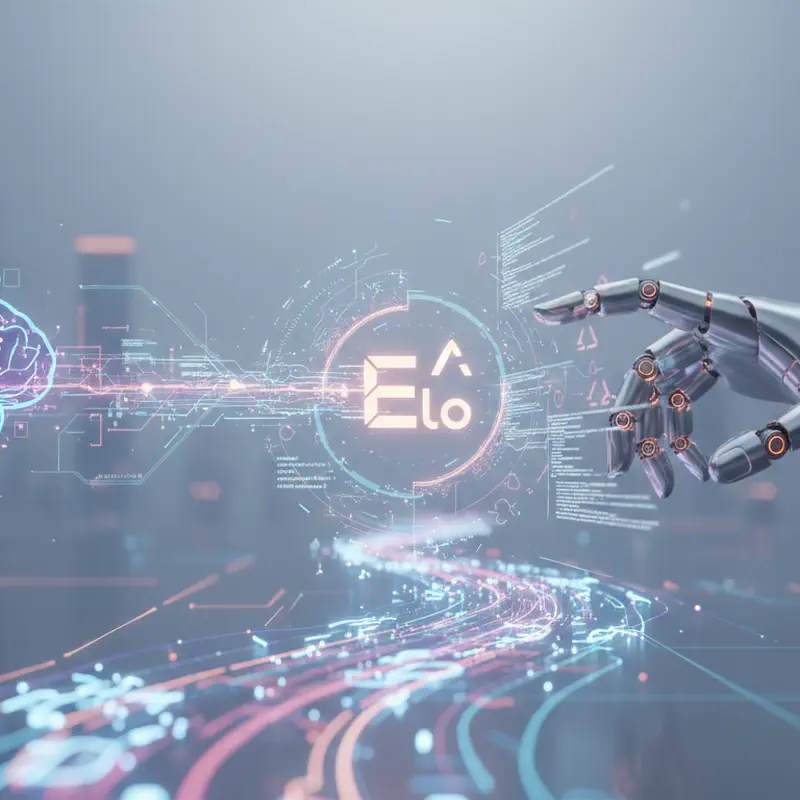
We’ve all seen the headlines. AI is coding, AI is debugging, AI is even reviewing pull requests. But co-creating an entire programming language? That’s next level. When Anthropic’s Claude, a large language model (LLM) for the uninitiated, was credited as a co-creator for the new language Elo, it wasn't just a quirky headline. It signaled a subtle, yet profound, shift in how we might approach foundational engineering work.
What "Co-Creation" Really Means (and Doesn't)
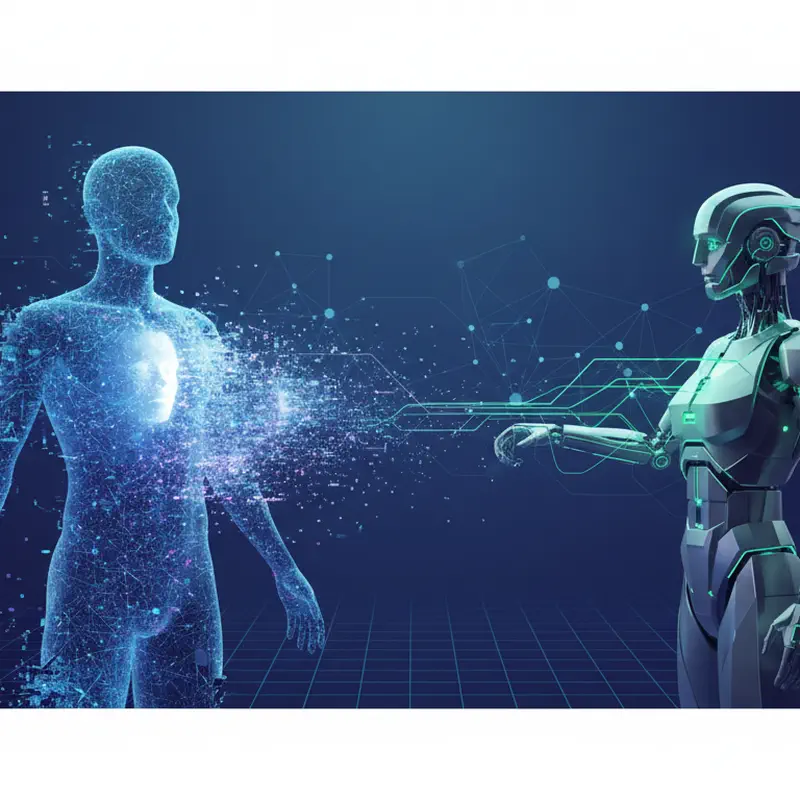
Let’s be clear: this isn’t a story about an LLM sipping virtual coffee and cranking out a new spec sheet autonomously. That’s science fiction for now. "Co-creation" here means an incredibly deep, iterative collaboration. Think of it as advanced pair programming where one partner has near-instant recall of countless language design patterns and a knack for generating novel syntax or semantics on demand. The human engineer sets the vision, provides constraints, and critically, acts as the discerning editor and ultimate decision-maker.
The AI doesn't just write code snippets; it can suggest core language features, evaluate different syntactical approaches, or even propose grammar rules. You feed it a high-level concept - "I want a language for embedded systems with strong memory safety and concurrency primitives" and it starts bouncing ideas back. It’s like having an entire committee of very smart, very fast, very well-read language designers at your fingertips, ready to brainstorm 24/7 without needing snacks or bathroom breaks.
The Double-Edged Sword: Tradeoffs in AI-Driven Design
Sounds great, right? A fast-track to language innovation! But hold on, engineering isn't magic. Every powerful tool comes with tradeoffs. The immediate benefit is speed. Rapid prototyping of language features, exploring alternative syntaxes, generating boilerplate for parsers or compilers these tasks become incredibly accelerated. You can test more ideas in a week than a traditional team might in months. This reduces the sheer cognitive load of starting from a blank slate, allowing engineers to focus on the higher-level goals and philosophical underpinnings of the language.
AI in language design isn't about replacing the human mind; it's about augmenting it, letting us iterate faster and explore broader design spaces than ever before.
However, the downsides are real. An LLM, by its nature, is a pattern-matcher. It excels at synthesizing existing knowledge. True novelty, a paradigm shift that breaks from established norms in a genuinely innovative way, still largely requires human intuition and radical thought. You might find the AI suggesting combinations of existing features rather than a truly fresh approach. There's also the "hallucination" factor; the AI might confidently propose incorrect grammar, inefficient constructs, or even features that are logically contradictory. The human expert is absolutely essential for rigorous validation, catching subtle flaws, and ensuring the final design is coherent, performant, and practical.
Confidently Opinionated Guidance: Best Practices for this New Frontier
So, how do we make this work *well*? You treat the AI as a sophisticated assistant, not a guru. First, establish clear design goals and non-negotiables. What problem is this language solving? What are its core values? Feed these constraints explicitly into your prompts. Don't just ask for "a language." Ask for "a language that compiles to WASM, prioritizes immutable data structures, and has Rust-like ownership semantics but a Python-like syntax for readability." Get specific.
Second, implement a rapid feedback loop. Test, test, test. If the AI suggests a syntax, immediately try to parse it, even if manually. Write small programs in your nascent language as you go. This helps catch inconsistencies early. Remember, the AI is a generator; you are the validator. Your prompt engineering skills become paramount. Think like a systems architect defining requirements, not just a casual conversationalist. You're building a specification, one AI-assisted iteration at a time.
The Evolving Role of the Language Engineer
This development isn't about engineers becoming obsolete. Far from it. It's about evolving your role. Instead of spending weeks wrestling with initial grammar definitions or debating minor syntax variations, you're elevated to a higher plane of abstraction. You become less of a low-level implementer and more of a grand architect. Your expertise shifts from rote syntax to deeper semantic understanding, system performance, and the psychological impact of language design on developer productivity and mental models.
It means embracing a hybrid workflow where AI handles much of the grunt work of ideation and pattern synthesis, freeing you to focus on the truly hard problems: ensuring type soundness, designing robust error handling, optimizing runtime performance, and building a cohesive ecosystem. The future isn't AI *replacing* programming language designers; it's AI *empowering* them to create more, faster, and perhaps, with a broader imaginative scope than ever before. It's an exciting time to be an engineer, provided you're ready to adjust your toolkit.

Windsurf
All my projects and even this website is build using Windsurf Editor. Windsurf is the most intuitive AI coding experience, built to keep you and your team in flow.