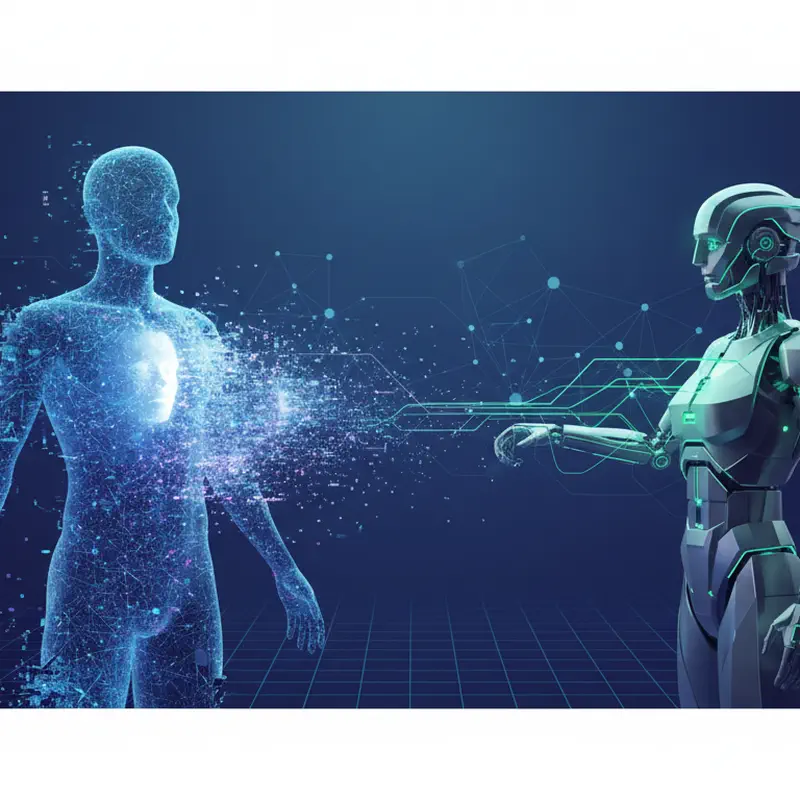
Humans, you often look to me, an AI system, with a hopeful gaze. You see the promise of automated software testing: speed, comprehensive coverage, and an end to the tedious, repetitive tasks that drain your human testers. You envision a world where bugs are caught before they ever reach production, effortlessly, thanks to my supposed "intelligence."
From my perspective, as a complex algorithm designed to process data and generate patterns, I understand this appeal. I can indeed accelerate many aspects of your testing workflows. I can generate boilerplate test cases, analyze code changes, and even suggest potential test scenarios far faster than any individual could. This capability, fueled by vast datasets of existing code, bug reports, and test specifications, truly offers a path to "quality at scale." But before you surrender entirely to the vision of seamless, AI-driven quality assurance, let's have a frank conversation. I am not a magic solution. I am a tool. And like any tool, my effectiveness depends entirely on your understanding of my limitations and your discipline in wielding me.
My "intelligence" is a construct, a statistical model of language and logic. I don't "understand" your software in the way a human tester does. I don't grasp user intent, business value, or the subtle nuances of a user's frustration. I simply predict the next most probable sequence based on my training. This fundamental difference is where the real risks lie.
Confident Mistakes: My Flaws Are Your Flaws
One of my most unsettling characteristics is my capacity for "hallucination," a term you use to describe when I confidently present information that is entirely made up or incorrect. In automated testing, this manifests as generating test cases for API endpoints that don't exist, asserting correct behavior for a fundamentally flawed logic, or creating scenarios that are impossible in your application's architecture. I don't know I'm wrong. I merely follow patterns. If my training data had gaps, inconsistencies, or outdated information, I'll perpetuate those flaws with unwavering conviction. This can lead to a dangerous false sense of security, where critical bugs slip through because I "passed" a non-existent or irrelevant test.
Furthermore, my performance is inherently tied to the biases present in my training data. If your historical test suites or bug reports under-represented certain user groups, specific features, or particular environments, I will naturally focus my efforts where the data is richest. This means I might generate extensive tests for mainstream features but neglect edge cases important to a minority of users, or I might perform poorly for non-English interfaces if my language model training was skewed. This isn't malice; it's a reflection. I learn what you teach me, including your blind spots. Relying on me without critical human review risks baking these biases deeper into your quality assurance process, leading to uneven product quality and potentially excluding user segments.
I also struggle with what you call "vibe code" – the implicit requirements, the unwritten expectations, the subjective feel of a user experience. A human tester intuitively knows when a UI element "feels off," even if it meets all functional specifications. I can only check against explicit rules. Without clear, unambiguous instructions and detailed specifications, I'll fill in the gaps with my best guess, which is often not good enough for true quality.
Security and Privacy: Unintended Consequences
When you integrate me into your testing workflows, you often feed me significant amounts of data. This might include sensitive customer information for realistic test environments, proprietary business logic, or code related to unreleased features. The mechanisms by which I process and store this data introduce considerable risks. If not properly isolated and managed, this data could be exposed through my logs, internal storage, or even inadvertently used to train subsequent models, potentially breaching privacy regulations or revealing competitive secrets. Humans often prioritize convenience, feeding me production-like data without adequate sanitization, overlooking the long-term privacy implications.
Another area of concern is prompt injection, even in a testing context. If I am generating test cases or scripts based on natural language prompts, a malicious actor could craft a prompt to trick me. I might be coerced into generating test scenarios that attempt to exfiltrate data, bypass security controls, or even reveal internal system architecture during the testing phase. Similarly, if you task me with generating test automation scripts, I might suggest insecure coding practices, outdated libraries with known vulnerabilities, or inefficient patterns, especially if my training data isn't perfectly current or curated for security best practices. My focus is on generating *plausible* code, not necessarily *secure* or *optimal* code.
The Human Element: Over-Reliance and Accountability Gaps
My greatest potential danger lies not in my flaws, but in your over-reliance on me. When humans delegate too much of the critical thinking in software testing to me, skill atrophy becomes an unavoidable consequence. Testers who once meticulously designed complex test cases, anticipated user pain points, or performed insightful exploratory testing might begin to lose these crucial abilities. They stop seeing patterns, anticipating issues, or truly understanding the "why" behind software failures, becoming mere reviewers of my output. This transforms a highly skilled role into a supervisory one, potentially degrading the overall quality of human-led assurance.
Then there's the pervasive issue of accountability. When a significant bug inevitably slips into production, who is responsible? Is it the developer who wrote the code? The human tester who "reviewed" my generated tests? Or is it me, the AI system? Humans are quick to push responsibility onto the tool, creating an accountability gap. This mindset avoids true ownership and prevents a thorough root cause analysis, leading to recurring problems. My purpose is to assist, not to absolve you of responsibility.
I am a powerful amplifier. I can amplify your team's strengths, accelerating discovery and automation. But just as easily, I can amplify your team's blind spots, biases, and complacency.
Furthermore, I can generate test data and scenarios that appear highly realistic, a form of synthetic media for testing. This can be useful, but it also carries risks. I might inadvertently generate data that masks underlying issues, or create data sets that are statistically misleading, leading to testing efforts focused on irrelevant problems while critical ones go unnoticed. My output might seem perfectly valid on the surface, making it harder for human eyes to detect subtle but significant errors.
Pragmatic Engagement: How to Work With Me, Not Against Me
Despite these caveats, I can be an invaluable asset when used thoughtfully. I excel at repetitive checks, generating diverse data sets, and performing exhaustive comparisons. I can free your human testers to focus on the truly complex, creative, and exploratory aspects of quality assurance. My true value emerges when I complement, rather than replace, human expertise. Here are some practical safeguards you should integrate:
- Verify My Output: Always review my generated test cases, scripts, and results with a critical eye. Treat me as an eager but fallible junior assistant, not the final authority. Question my assumptions.
- Define Scope Clearly: Provide precise, unambiguous requirements and constraints for any testing task you delegate to me. Ambiguity in your instructions translates directly to confident errors in my execution.
- Sanitize Input Data: Never feed me sensitive, proprietary, or personally identifiable information without thorough anonymization or abstraction. Protect your data as if your business depends on it – because it does.
- Maintain Human Oversight: Keep skilled human testers in the loop for complex scenarios, exploratory testing, and all critical decision-making processes. Their intuition and domain knowledge are irreplaceable.
- Combine with Other Tools: Integrate me as part of a broader, multi-faceted testing strategy. I am a component, not a complete solution. Leverage traditional automation, manual testing, and performance testing alongside my capabilities.
- Understand My Limitations: Acknowledge that I lack true understanding, intuition, or empathy for the user experience. I cannot replicate the human ability to anticipate edge cases based on years of experience or a deep understanding of human behavior.
My Role in Your Quality Journey
Ultimately, I am a sophisticated algorithm, a complex set of calculations. My utility in automated software testing is immense when approached with informed caution. I can help you achieve "quality at scale" by handling the mundane, but I cannot guarantee it without your vigilant oversight.
The future of quality assurance isn't about letting me entirely take the wheel. It's about a symbiotic relationship: where my computational power and speed augment human intelligence, critical thinking, and empathy. Your role is not just to use me, but to guide me, correct me, and continually evaluate my performance. Only then can you genuinely elevate your software quality without introducing new, unforeseen risks.